

Desktop Support
Desktop Support and Endpoint Management Services
Technology works best when users do not have to
Cloud technology has changed how organizations build, scale, and manage their IT environments.
Instead of relying solely on physical servers and on-premise systems, businesses can now deploy secure infrastructure, applications, storage, and user environments through flexible cloud platforms. When designed properly, cloud environments improve agility, reduce capital expenses, and support modern workforce models.
Cloud adoption, however, is not just about moving systems offsite. It requires strategic planning, security alignment, performance optimization, and ongoing management.
MORSECOM delivers cloud infrastructure and hosted services that help organizations build secure, scalable environments aligned with operational goals. From public cloud platforms to private and hybrid architectures, we design cloud strategies that support both regional operations and nationwide expansion.
Cloud solutions offer flexibility, but flexibility without structure can introduce risk.
Organizations often adopt cloud services incrementally. A file share here. A backup solution there. A hosted application added later. Over time, this can create fragmented environments that increase complexity and reduce visibility.
A strategic cloud approach ensures that infrastructure, security, performance, and governance work together.
Well-designed cloud environments help organizations:
Cloud becomes an operational advantage instead of a patchwork of tools.
Public cloud platforms provide on-demand computing resources delivered through globally managed infrastructure.
Leading platforms such as Amazon Web Services, Microsoft Azure, and Google Cloud Platform offer scalable environments for hosting applications, data, and services without the need for physical infrastructure ownership.
Public cloud environments are often ideal for organizations seeking flexibility, rapid deployment, and consumption-based cost models.
Some organizations require greater control over infrastructure, security, or compliance. Private cloud environments provide dedicated resources with enhanced governance and customization.
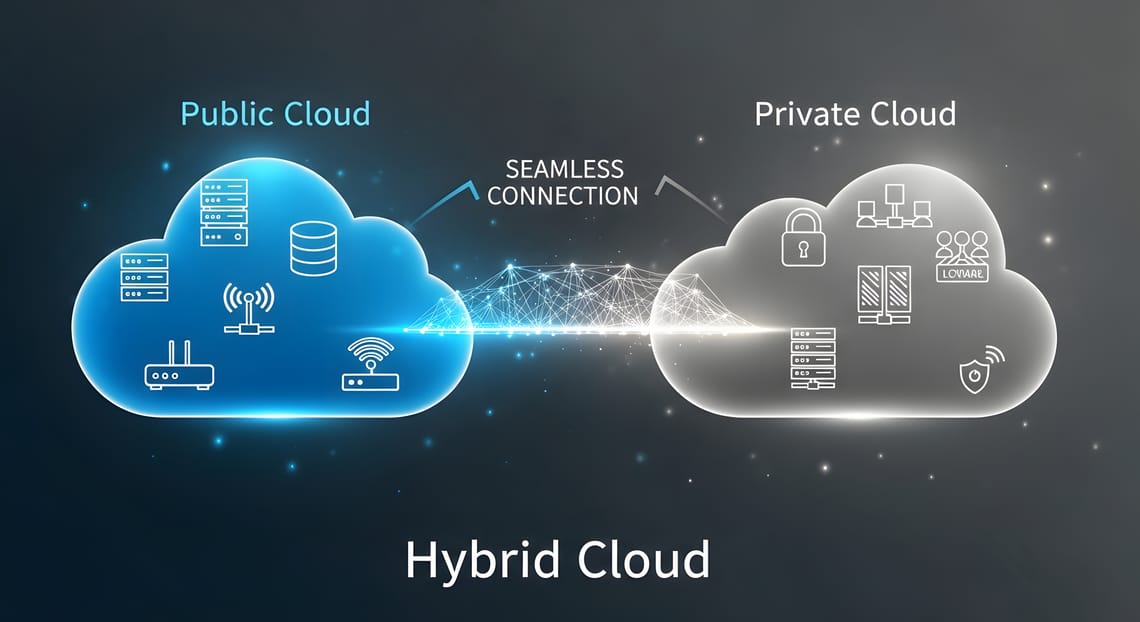
Hybrid cloud architectures combine public and private environments to balance flexibility with control. Sensitive workloads can remain in private infrastructure while scalable resources are deployed in public platforms.
This blended approach supports performance, regulatory requirements, and cost management.
Infrastructure as a Service provides virtualized computing resources delivered through the cloud.
Instead of purchasing and maintaining physical servers, organizations can provision computing power, storage, and networking resources on demand.
IaaS environments allow businesses to:
This model increases operational flexibility while reducing infrastructure overhead.
Data is one of an organization’s most valuable assets. Cloud storage solutions provide secure, scalable repositories for business information while improving accessibility and resilience.
Cloud-based backup and recovery services help protect against:
Reliable data protection supports business continuity and compliance requirements.
Modern workforces are increasingly mobile and distributed. Virtual desktop environments allow users to access secure workspaces from virtually any device or location.
Hosted desktops centralize applications, data, and security controls while providing a consistent user experience.
Virtual environments support:
This approach enhances flexibility without sacrificing security.
Cloud strategies must support both current operations and future expansion.
MORSECOM works with organizations throughout Florida while delivering cloud solutions for distributed and multi-location businesses nationwide. Whether supporting regional offices, national teams, or fully remote operations, cloud infrastructure must remain secure, reliable, and scalable.
Our approach aligns cloud design with long-term growth plans and operational requirements.
Not every organization moves to the cloud in the same way.
Some begin with backup and storage. Others migrate applications or deploy virtual infrastructure. The right path depends on business priorities, compliance needs, and existing systems.
MORSECOM helps organizations assess readiness, design cloud architectures, manage migrations, and provide ongoing support that evolves with operational needs.
Cloud infrastructure refers to computing resources such as servers, storage, and networking delivered through remote data centers rather than on-premise hardware.
Public cloud uses shared infrastructure managed by providers like AWS, Azure, or Google Cloud. Private cloud uses dedicated resources with greater control and customization.
Hybrid cloud combines public and private cloud resources, allowing organizations to balance scalability with control and compliance requirements.
IaaS provides virtual servers, storage, and networking through the cloud so organizations can scale resources without purchasing physical hardware.
Cloud backup stores copies of business data in secure remote environments, helping organizations recover quickly from data loss, cyberattacks, or system failures.
Virtual desktops allow users to access secure work environments from any device or location, supporting remote work and centralized management.
Yes. MORSECOM supports organizations throughout Florida and provides cloud infrastructure services for distributed businesses nationwide.

If your organization is looking to modernize infrastructure, protect critical data, and support flexible operations, MORSECOM can help.
Our cloud infrastructure and hosted services provide secure, scalable environments designed to support business growth.
Subscribe to my newsletter to get the latest updates and news